Sticky Toffee Pudding for Beginners: Dates, Sponge, and Sauce
Sticky toffee pudding looks like a restaurant dessert. It is really three ordinary things stacked together: a damp, date-flecked sponge, a toffee sauce made from butter, sugar and cream, and the moment where the two meet. None of those steps is hard. What separates a good one from a forgettable one is timing — pulling the sponge out of the oven early enough, and having warm sauce ready when it lands on the counter.
Here is the whole process, written for someone who has never made it before.
What You Are Actually Making
The sponge is not a light cake, and it is not meant to be. It is a soft, dark, faintly savoury cake built on dates. Those dates get soaked in boiling water with bicarbonate of soda until they collapse, then go into a buttery batter of brown sugar, eggs and flour. You bake it until just set. It should taste like it might fall apart, and it should never be dry.
The sauce is a caramel made with cream and butter, which is a far more forgiving thing than the dry caramel you might have burnt once and never attempted again. Brown sugar and butter melt together, cream goes in, and you simmer it for a few minutes until it coats a spoon. Stir it, watch it, and it will not misbehave.
The pudding is served warm. Not hot from the oven, not cold from the fridge. That middle temperature is where the sauce soaks in and the whole thing gets sticky in the way the name promises.
Step One: The Dates
Buy pitted dates if you can, and check them anyway. Every bag of supposedly stoned dates contains one stone, and it will find the nearest tooth. You need about 200g.
Chopping dates is the only part of this recipe that feels like work, so make it easier on yourself:
- Oil the blade lightly or dust it with flour. Sticky dates cling to a dry knife.
- Use kitchen scissors on a block of dates. Snip straight into the bowl and skip the cutting board entirely.
- Aim for pea-sized pieces, not a paste. You want to see dates in the finished sponge.
- Keep a small bowl of hot water nearby to rinse your fingers when they get tacky.
Put the chopped dates in a heatproof bowl, pour over roughly 175ml of just-boiled water, and add a teaspoon of bicarbonate of soda. The mixture will hiss and foam, which tells you the water was genuinely hot. Leave it for ten minutes. The dates soften, the liquid darkens to something like thin syrup, and you have the base of your sponge. Do not drain it — every drop of that liquid goes into the batter.
Step Two: The Sponge Batter
Heat the oven to 180°C (350°F), or 160°C if you use a fan. Butter a 20cm square tin and line the base with baking paper. Square gives you neat portions; round works just as well and will bake a few minutes faster.
Beat 85g of soft butter with 150g of light or dark brown sugar until it lightens and looks a little fluffy — two or three minutes with a hand mixer, longer by arm. Beat in two eggs, one at a time. If the mixture looks slightly grainy or curdled at this stage, ignore it; the flour and dates will bring it back. Fold in 175g of self-raising flour, or plain flour with a teaspoon of baking powder, until just combined. Then stir in the warm date mixture, liquid and all.
The finished batter is looser than a standard cake batter. That is correct, not a mistake. Scrape it into the tin, level the top with the back of a spoon, and put it in the oven.
Step Three: Bake It, Then Stop
Thirty to thirty-five minutes. Check at thirty. A skewer pushed into the centre should come out with a few moist crumbs clinging to it — not wet batter, and not perfectly clean. The top should spring back when you press it gently with a fingertip.
Overbaking is the classic beginner's error here, and it turns a sticky pudding into a dry one. If you are torn, take it out two minutes early. Leave it in the tin for ten minutes while you make the sauce. Do not turn it out onto a rack; it is too soft for that and it needs the tin to hold its shape.
Step Four: The Toffee Sauce
Put 115g of butter and 115g of dark brown sugar into a saucepan over medium heat. From there:
- Melt the butter and sugar together, stirring, until the sugar has dissolved and the mixture looks glossy. A minute or two.
- Pour in 150ml of double cream. It will bubble up enthusiastically; stir it back down.
- Bring to a gentle simmer and cook for three to four minutes, stirring, until it thickens enough to coat the back of a spoon.
- Take it off the heat and stir in a pinch of salt.
Two things to watch. Keep stirring, because sugar and butter catch quickly at the edges of a pan and burnt caramel tastes bitter in a way no amount of cream can fix. And remember the sauce thickens considerably as it cools, so pull it off the heat while it still runs easily off the spoon. If it does look grainy or split, whisk in a spoonful of hot water and it will come back together.
Serving, Storing and Reheating
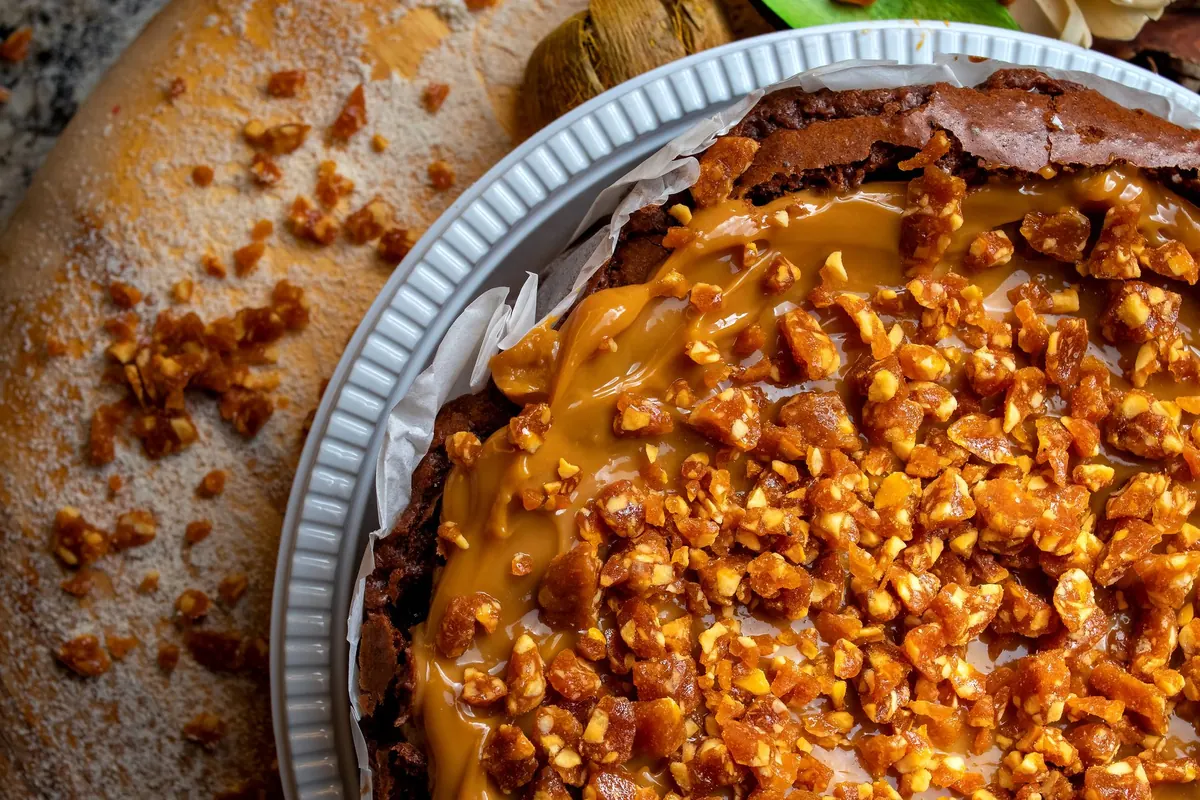
Pour about half the sauce over the sponge while it is still in the tin and let it sit for five minutes. The pudding drinks it in, and that is the sticky part of the name accounted for. Cut into squares, lift them out, and spoon more sauce over each portion at the table.
Serve something cold and plain alongside: pouring cream, vanilla ice cream, or custard if you want the full traditional plate. The contrast matters more than the choice. A sweet, buttery sauce needs something uncluttered next to it.
Leftovers keep for three days in a covered tin at room temperature, or five days in the fridge. The sauce keeps in a jar in the fridge for about a week. Reheat individual portions in the microwave for twenty to thirty seconds, or cover the tin with foil and warm it through in a low oven. Loosen reheated sauce with a splash of water or cream — it sets firm when cold.
The Three Things That Decide It
Get these right and the rest is forgiving.
Take the sponge out when a skewer comes away with crumbs, not batter. Have the sauce warm and ready as the pudding comes out of the oven, because a pudding that sits waiting is a pudding losing its edge. And eat it warm, with more sauce than feels sensible.
Cold sticky toffee pudding is a lesser thing: dense, claggy, and sweet without relief. Warm it properly and it is one of the best desserts you can put on a table — and one you can make on a Tuesday.


You Might Also Like
How Southern banana pudding comes together: cooked custard, vanilla wafers, ripe bananas, and the meringue-or-whipped-cream choice, with layering and chilling tips that work.
A practical Christmas pudding timeline from Stir-Up Sunday to the holiday table, covering mixing, aging, feeding, steaming, reheating, and serving.